Ideal Playlist: Madison Music to Dance at an Unforgettable Wedding
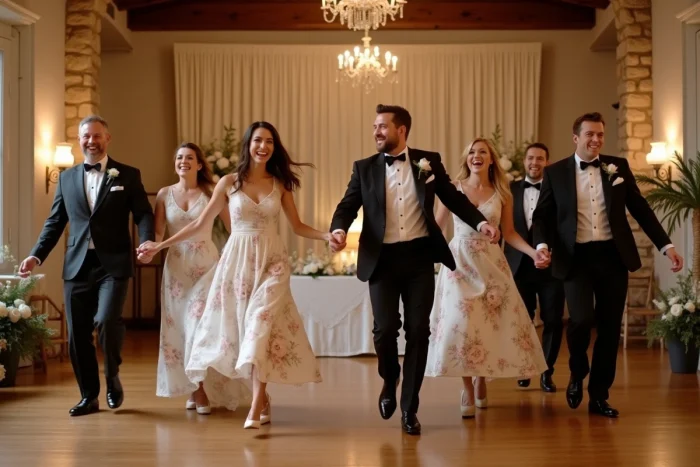
On a wedding dance floor, the madison remains the dance that gets everyone up at the same time. No need for lessons, no need for a partner: just a few side steps, a quarter turn, and three generations find themselves aligned. However, it is essential to choose the right tracks at the right moment during the evening for the magic to happen.
When to start the madison during a wedding
Have you ever seen a madison started too early, right after the first dance? The effect can fall flat. In recent years, wedding DJs have repositioned this dance later in the evening. The madison then serves as a unifying moment between two blocks of modern music, rather than an introduction to the dance.
The idea is simple: couples want a personal first dance (waltz, slow dance, choreography to a pop song), followed by a first energetic dance set. The madison then comes in as a collective reminder, when the shyest guests have already had a drink or two and the dance floor is warm.
This late placement solves a real problem. At the beginning of the evening, guests are still hesitant to get up. Placing the madison after an hour of dancing helps to gather those who were sitting and reignite the group’s energy. DJs who practice this repositioning find that the dance floor remains full longer after the madison block.
Preparing a selection of madison music to dance at a wedding requires thinking about this placement even before choosing the tracks.
Madison wedding playlist: three blocks to structure the dance
Playing five madisons in a row tires out the dance floor. It’s better to organize the selection into short blocks, spaced throughout the evening. Here’s a structure that works.
The classic block to kick off the movement
The first madison should be a track that everyone recognizes from the first few measures. Historical tracks like “Madison Time” or “Reviens Madison” fulfill this role. Their tempo is steady, the choreography is known, and guests over fifty naturally take the lead of the group.
Two to three classic tracks are enough for this first block. Beyond that, the younger guests lose interest. The goal is to create momentum, not to turn the evening into a tea dance.
The French block to broaden the dance floor
The recent trend is to dance a madison to very well-known French songs (Claude François, Stromae, Angèle, Zazie) with an adapted homemade choreography. This choice changes the dynamic: guests who do not know the steps of the classic madison feel less intimidated by a song they are already humming.
This block works particularly well at mixed or bilingual weddings. The madison then becomes a neutral dance that all families can share, even when they do not have the same usual musical repertoires.
The energy block to finish on a high note
At the end of the evening, a final madison to a faster tempo or a remixed version reignites the dance floor one last time. DJs sometimes use edited versions, shorter, tailored to the attention span of the younger guests.
Criteria for selecting madison tracks for a wedding
Not all tracks labeled “madison” are equal on a wedding dance floor. A few concrete criteria help to sort them out.
- The tempo must remain between a walkable and danceable rhythm: too slow, dancers drag and lose synchronization; too fast, grandparents drop out after thirty seconds.
- The intro of the track must be recognizable within a few seconds. A song with a one-minute intro clears the dance floor before the dance even starts.
- The ideal duration is around three minutes. Longer versions of five or six minutes work at a classic dance party, but at a wedding, attention disperses quickly.
- The sound quality of the file matters: a compressed or poorly mastered track does not sound good on a reception hall sound system. Prefer studio versions.
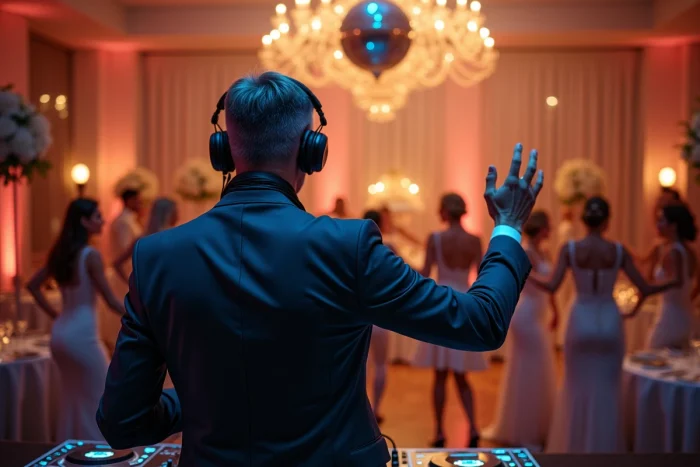
Intergenerational madison: adapting the playlist to the wedding audience
Since the post-Covid recovery, wedding vendors have reported an increase in requests for “intergenerational madison.” The principle: choose tracks that appeal to both teenagers, parents, and grandparents present.
The difficulty does not come from the madison itself (the steps remain the same), but from the musical selection. A track from the 60s speaks to the older guests. A recent mashup attracts the younger ones. Alternating eras in the playlist avoids losing part of the audience.
In Franco-Maghreb, Franco-Portuguese, or Franco-Italian weddings, the madison plays a special role. When the two families do not share the same musical repertoire, this line dance offers common ground. The music and choreography are simple enough that no one feels excluded.
A practical detail often overlooked: having a visible leader on the dance floor changes everything. Even with a good track, if no one shows the steps, half the guests stay on the sidelines. The best man, a motivated cousin, or the DJ himself can fill this role.
- Designate one or two “leaders” before the evening, among guests who know the steps well.
- Place them in the front row, facing the rest of the dance floor, so that beginners can follow by mimicking.
- Ask the DJ to announce direction changes on the microphone during the first track, then let the group become autonomous.
The madison at weddings does not rely on the rarity of tracks or originality at all costs. It relies on the right track, at the right moment, with someone showing the way. The rest follows naturally.