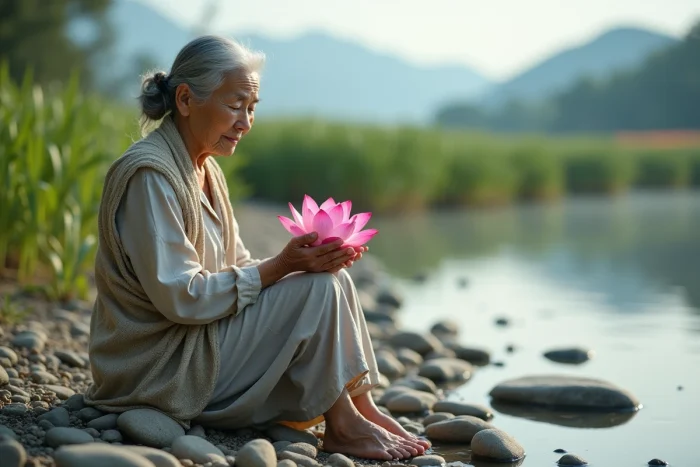
Discover the flower symbolizing strength and resilience around the world
Botanists rarely agree on attributing a single, unique meaning to each flower. Across continents, however, certain varieties acquire an unexpected reputation, often far removed from their original use or initial symbolism. In Asia, a species revered for its tenacity survives where others decline, while in the West, another embodies the ability to be reborn after storms.
Cultural differences mark the recognition of these plant emblems. Popular traditions, religious beliefs, and historical contexts shape interpretations that can be contradictory, but all converge on the same idea: some flowers transcend their simple beauty to illustrate inner strength.
Resilience in Nature: When Flowers Become Universal Symbols
Looking at the plant world reveals much more than mere decoration: each flower carries its share of stories, struggles, and hopes. Over the centuries, societies have invested the language of flowers with deep meaning, drawing images of strength, resilience, purity, and hope. Take the lotus in Asia, which rises, unperturbed, above murky waters: rooted in mud, it embodies resilience and the ability to surpass oneself. From Egyptian mythology to Buddhism and Hinduism, this flower symbolizes inner growth, purity, and rebirth, inspiring believers and philosophers through the ages.
On the other side of the globe, the poppy has established itself as a messenger of memory and resilience, marking the fields scarred by World War I. Alongside it, the lily of the valley, with its intense but brief bloom, reminds us of tenacity in the face of adversity, evoking regained happiness. One cannot ignore the snowdrop, which breaks through the snow to announce the light, or the shepherd’s purse and the elderberry, reflections of hope and acceptance of life’s cycles.
All these interpretations, sometimes contradictory, actually tell the same story: nature, well beyond its beauty, becomes a mirror of our sincere feelings. The flower symbol of strength and resilience is not limited to a geography or a belief. It transcends borders, uniting people around a common idea: perseverance, transformation, innocence, purity, joy—so many facets of the language of flowers, shaped by history and traditions.
Which Flowers Embody Strength Across Cultures and Why?
The choice of a flower to represent strength varies from continent to continent, but some stand out due to their history and symbolism. In China, the peony has fascinated for centuries: exuberant blooming, unwavering vigor, it captivates scholars and emperors, embodying success and endurance. The plum blossom dares to bloom during winter, defying the biting cold, a powerful image celebrated in both Japan and China, where it inspires poets and artists with its perseverance.
The lotus, unbeatable in Asia, grows in the mud to open up to the light. Its place in Buddhism, Hinduism, and ancient Egypt is undeniable. It accompanies Vishnu, Brahma, Lakshmi, and Sarasvati, and is part of the identity of India and Vietnam. Its color is not trivial: white for purity and tenacity, pink for rebirth, red for passion and the strength of the heart.
In the West, the poppy has established itself as an emblem of collective resilience, associated with the memory of the fallen. The lily of the valley reminds us of regained joy and the ability to overcome setbacks. In Japan, the iris signifies strength, but it is absent from funeral rituals; it is found to celebrate vitality and health, never loss.
Universal, the red rose combines passion, fidelity, and resistance. It traverses societies, from Persian poems to European bouquets, embodying ardent love but also the ability to stand firm in the face of storms. From one end of the planet to the other, the strength of flowers is expressed through a thousand shades, stories, and uses.

Diving Deeper into the Language of Flowers: Pathways to Explore Resilience Beyond the Symbol
The language of flowers is not limited to a few famous figures. It unfolds in practices, uses, and narratives that traverse time and societies. The lotus is a striking example: well beyond temples or sacred texts, its posture inspires yoga, inviting stability and inner harmonization. The choice of a flower tattoo also becomes a way to inscribe resilience into the flesh, like a silent promise. Flowers nourish literature, Eastern art, but also innovation: the lotus effect, used for its self-cleaning properties, shows how nature inspires today’s technologies.
Beyond the great icons, other species enrich this subtle language. Here are some examples of flowers and their associated values:
- Healing: yarrow, known for soothing and repairing.
- Hope: shepherd’s purse, which accompanies fleeting sorrows.
- Joy: oxalis, a symbol of simple happiness and spontaneity.
- Constancy: laurel, associated with the fidelity of feelings.
Others complete this bouquet: the wild carrot for its delicacy and femininity, the ceanothus for dreams and perseverance, the fern for sincerity, and the elderberry for the quiet strength of life’s cycles.
Upon closer inspection, the language of flowers is anything but a fixed manual. It invites exploration, feeling, and connecting the visible and the invisible. Between memory, beauty, and transformation, it reminds us that resilience is cultivated, season after season, like a promise of better days.