
Practical Tips for Better Managing Your Money Daily and Preparing for the Future
Managing money on a daily basis involves measuring discrepancies: between what comes in and what goes out, between what we think we spend and what we actually spend, between the return on an investment and the erosion caused by inflation. Before looking for tips, one must know what to measure and with what tools.
Personal cash flow: the items that widen the gap
Budget guides often list the same categories (food, housing, transportation). The missing angle is the real hierarchy between fixed and variable expenses, and especially the share of automatic withdrawals that we no longer monitor.
The Bank of France notes in its 2025 annual report from the Payment Means Security Observatory that the number of non-cash payments continues to increase, driven by mobile payments and recurring withdrawals. This growing flow makes manual tracking nearly impossible without dedicated tools.
| Type of Expense | Recommended Monitoring Frequency | Risk if Not Monitored |
|---|---|---|
| Subscriptions (streaming, apps, insurance) | Quarterly | Invisible accumulation of small amounts |
| Energy withdrawals | Monthly (account statement) | Heavy adjustment at year-end |
| Impulse purchases (mobile payment, contactless) | Weekly | Exceeding the variable budget |
| Debt repayments | Monthly | Late penalties, incident fees |
A projected budget is not enough: it is the monitoring of actual cash flow that prevents incidents. Maintaining a margin in the checking account, even a modest one, protects against overdraft fees that can represent a significant expense category.
To delve deeper into financial management mechanisms and compare approaches, the resources available on the Conseils et Finances website detail several strategies tailored to different income profiles.
Bank fraud and daily management: an underestimated angle
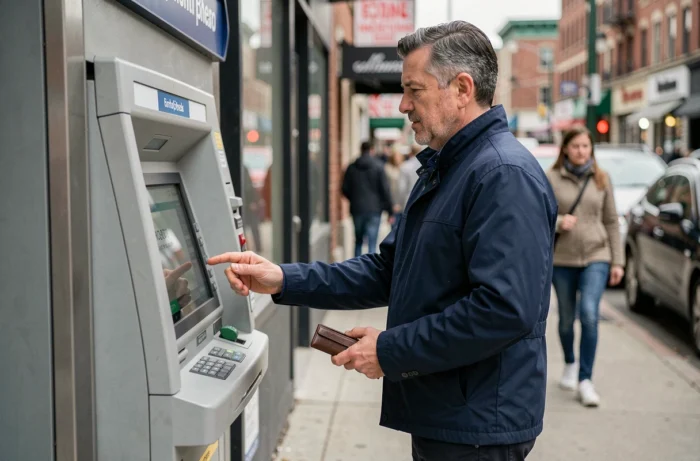
Daily money management is not limited to reducing expenses. It includes protection against unchosen losses. However, the nature of bank fraud has changed.
According to the 2025 report from the Payment Means Security Observatory (Bank of France, published on September 9, 2026), manipulation fraud has significantly increased while the total number of fraudulent operations has decreased. The typical scenario: a fake bank advisor calls and urges you to validate a transfer “to protect your account”.
Concrete reflexes against manipulation fraud
- Never make a transfer at the request of a caller, even if they know your name and bank. Hang up and call back using your agency’s official number.
- Activate real-time notifications for every transaction on your checking account. An unrecognized debit detected within the hour is easier to contest.
- Regularly check the beneficiaries registered in your online banking space. An addition you did not make indicates a compromise.
Integrating these checks into your budgeting routine takes just a few minutes a week. The cost of successful fraud, however, can absorb several months of savings.
Savings and returns: building a plan that withstands rate drops
Most guides recommend saving a fixed percentage of your income. The problem is that the return on the chosen investment changes the game in the long term, and many households concentrate their savings on a single vehicle.
The rate of the Livret A has undergone several recent changes. After being raised in response to inflation, it has since fallen. According to available data for 2026, the Livret A shows a rate of 1.7%, which places it well below the inflation felt on certain common items (food, energy).
Comparing available savings vehicles
| Vehicle | Indicative Return (2026) | Liquidity | Taxation |
|---|---|---|---|
| Livret A | 1.7% | Immediate | Exempt |
Diversifying your investments according to the horizon of each goal (short term in a savings account, medium term in life insurance, long term in bonds or stocks) reduces the risk of seeing your savings lose purchasing power.
Preparing for the financial future is not just about increasing a single rate. It involves aligning each saved amount with the deadline of the project it finances: an emergency fund accessible within 24 hours, a real estate contribution locked in a more rewarding vehicle, a supplementary retirement plan over a horizon of several decades.

Automating without losing control: the trap of scheduled transfers
Setting up an automatic transfer to a savings account on payday is a recurring piece of advice. It works, provided you don’t freeze it indefinitely.
An automatic savings amount calibrated to a January salary can become inappropriate in June if an unexpected expense arises (repair, rent increase, change in family situation). Reviewing the amount of the automatic transfer at least twice a year prevents ending up in overdraft despite apparent savings discipline.
Automation remains a powerful lever for managing your budget, but it does not replace control. Checking your actual balance, not just your available balance, remains the most reliable financial management gesture on a daily basis.