
The best gift and decoration ideas for inspired and refined shopping
The gift and decoration market is undergoing a discreet yet profound transformation. The AGEC law, which now regulates environmental claims made by brands, is reshuffling the deck among concept stores, marketplaces, and independent shops. Catalogs are being renewed under the combined pressure of packaging regulations and a growing demand for traceable items. Searching for a gift idea or a decorative object is no longer just about browsing a list of trendy products.
Labels and traceability: what is changing in eco-responsible decorative gifts
Concept stores specializing in decoration are increasingly displaying certifications on their product sheets. FSC labels for wood, GOTS for organic textiles, OEKO-TEX for dyes, and EU Ecolabel for finished products have become standard offerings in recent years.
This progression is not purely marketing. The AGEC law requires sellers to justify any environmental claims, pushing shops to rely on verifiable certifications rather than slogans. A box of artisanal candles labeled “natural” without reference to a specific specification is subject to penalties.
For those looking for an original and responsible gift, the reflex to adopt is to check for at least one recognized label on the packaging or product sheet. Among the brands that structure their selection around these criteria, you can visit the Le Comptoir de Violette website to explore an offer centered around decoration and gifts.

Field feedback diverges on one point: the readability of these labels for the general public remains limited. A buyer pressed for time due to a birthday or Mother’s Day does not always take the time to distinguish a GOTS label from a simple in-house logo. The pre-selection by shops that filter their suppliers then becomes the true quality filter.
Reusable gift wrapping: the end of disposable paper in decoration
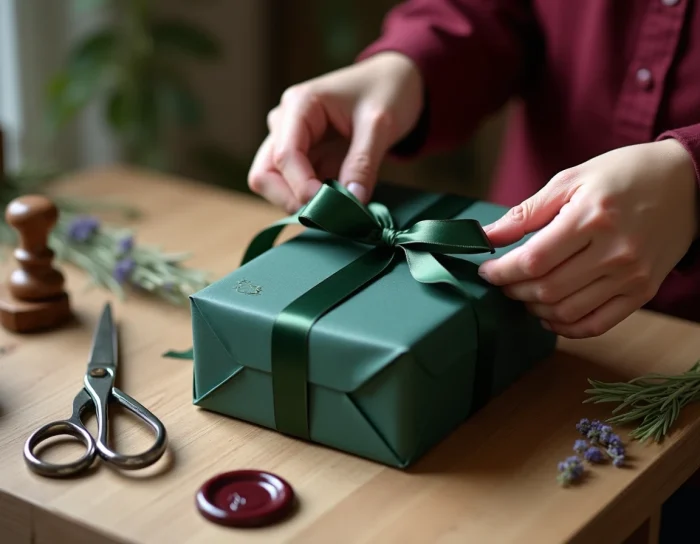
French regulations on packaging have accelerated a shift already initiated by some brands. The limitation of single-use plastics and the obligation to inform about recyclability have pushed decoration shops to rethink the very act of wrapping a gift.
Three packaging formats are gaining ground in concept stores:
- The furoshiki, a square piece of fabric tied according to Japanese tradition, which serves both as wrapping and a decorative gift in its own right
- Reusable rigid boxes, designed to be kept as storage or decorative objects once the gift is opened
- Fabric pouches (linen, certified cotton), often matching the brand’s collection and reusable as storage bags
Wrapping becomes an element of decoration rather than immediate waste. This shift also changes the perception of price: an embroidered linen pouch adds perceived value to the box or decorative pot it contains.
However, the additional cost of these sustainable wrappings remains a topic of discussion. For a promotional purchase or a small budget, a furoshiki made of organic cotton can represent a significant part of the total price. Brands that include it in the product price, without charging extra, offer better clarity.
Immaterial decorative gifts: workshops, coaching, and peer-to-peer rentals
Competing articles on the subject remain very focused on physical objects (vases, candles, lighting, cushions). A parallel trend is gaining momentum: giving a service related to decoration rather than a physical object.

Creative workshops (pottery, floral arrangement, candle making) have multiplied in large cities and are beginning to appear in medium-sized towns. Decoration coaching, in the form of a one- to two-hour consultation with an interior designer or decorator, constitutes an original gift that avoids the pitfalls of duplicates or poorly anticipated personal taste.
The rental of decorative items between individuals or via specialized platforms is also emerging, particularly for events (weddings, parties, ephemeral table decoration). This model aligns with the logic of the AGEC law by limiting the production of waste related to single-use decorations.
The available data does not yet allow for precise measurement of the share of these immaterial gifts in the overall decoration market. Feedback from concept stores suggests that demand is growing, particularly among buyers looking for a gift for someone already well-equipped with decorative objects.
Personalized gift selection: the criteria that make a difference
Personalization remains the most reliable lever for transforming a generic decorative gift into a memorable gesture. However, not all types of personalization are equal.
A personalized card slipped into a box does not have the same impact as an engraved object or a custom-made box. Brands that offer to create a box from a selection (pot, candle, table accessory) provide more flexibility than pre-composed boxes.
Several criteria deserve to be checked before purchasing:
- The possibility of choosing each element of the box separately, rather than a fixed assortment
- The quality of the product image and the description of materials, which allow for judging the level of finish from a distance
- The return and exchange conditions, particularly for a gift whose recipient might want to adjust the color or size
- The consistency between the displayed price and the actual positioning of the product (a basic cotton bag sold at the price of an exclusive item does not hold up to comparison)
A well-chosen decorative gift relies on the quality of the pre-selection, not on the multiplication of options. The best shops curate their collection rather than piling up references.
Inspired decoration shopping no longer solely involves searching for the seasonal “best of.” The traceability of materials, the format of the packaging, and the possibility of offering an experience rather than an object are redefining the contours of a refined gift. It remains for each buyer to define what, between a certified ceramic pot, a pottery workshop, or decoration coaching, best corresponds to the person receiving it.