How to Transport Your Motorcycle by Train in Europe: Guide and Practical Tips
Wagons full of two-wheelers, tracks crossing borders, and travelers still amazed to see their motorcycle speeding along, lying flat on a wagon: Europe offers, despite everything, a few lines for those dreaming of combining grand travel and mechanics. The auto-train connections allowing the transport of motorcycles across Europe mainly remain in Germany and Austria, while France discontinued its equivalent services several years ago. Some routes require booking several months in advance, others limit the weight or size of vehicles to be loaded, and pricing varies greatly depending on the period and the route. Combined transport, often associated with freight, does offer individuals some lesser-known options to cross the Alps or connect certain European capitals, with specific access and safety conditions. Road and maritime alternatives complement this complex regulatory landscape, where each choice involves precise logistical constraints.
Overview of solutions for transporting your motorcycle in Europe: between train, road, and alternatives
Connecting two European countries as a motorcyclist requires juggling several options. Each journey, each mode of transport imposes its own logic: the rarity of auto-train lines shapes the landscape, road trips appeal with their freedom, and a few mixed routes are still being invented away from the main highways. In Germany or Austria, some auto-train lines maintain the rail tradition by offering to load your motorcycle to reach major cities while enjoying a supervised and secure journey. Access conditions remain strict: advance booking, precise weight limits, tight schedules. When the tracks end, the road takes over. Taking your motorcycle yourself in a trailer or van allows you to build a custom itinerary, cross borders at your own pace, or enjoy the simplicity of camping on forgotten back roads. One must then think of every detail: straps, insurance, proper paperwork according to the country, safety during overnight stops. Hybrid solutions are emerging thanks to local initiatives or seasonal companies. For those wanting to delve deeper into the subject or compare available options, a comprehensive resource details these alternatives and the conditions to know: transporting your motorcycle by train in Europe.
Auto-train and combined transport: what are the specifics and where to find these services today?
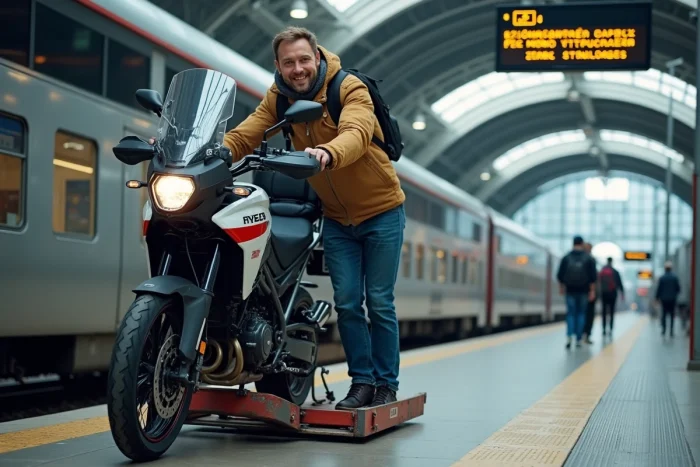
Transporting vehicles by train retains a sense of exception in Europe. French auto-trains connecting Paris, Marseille, or Bordeaux belong to the past, but in Germany and Austria, a few companies maintain a service for motorcyclists. Here, the motorcycle travels in its own wagon while the rider enjoys the comfort of the train. There is also combined transport, well-established between Switzerland and Italy, where one boards with their mount to cross tunnels or mountains while avoiding traffic jams.
Before choosing the most suitable option for your project, it is important to evaluate certain determining parameters:
- Travel time varies according to the density of rail traffic and the chosen route.
- Each country sets its own rules: Swiss speed, historical variety in France, or a shift towards other routes in the UK.
To travel with your motorcycle on these European rails, anticipation is key. Identifying available slots, ensuring that the two-wheeler format is compatible, checking loading instructions: all these actions make a difference and open the door to European metropolises without letting go of the handlebars once on site.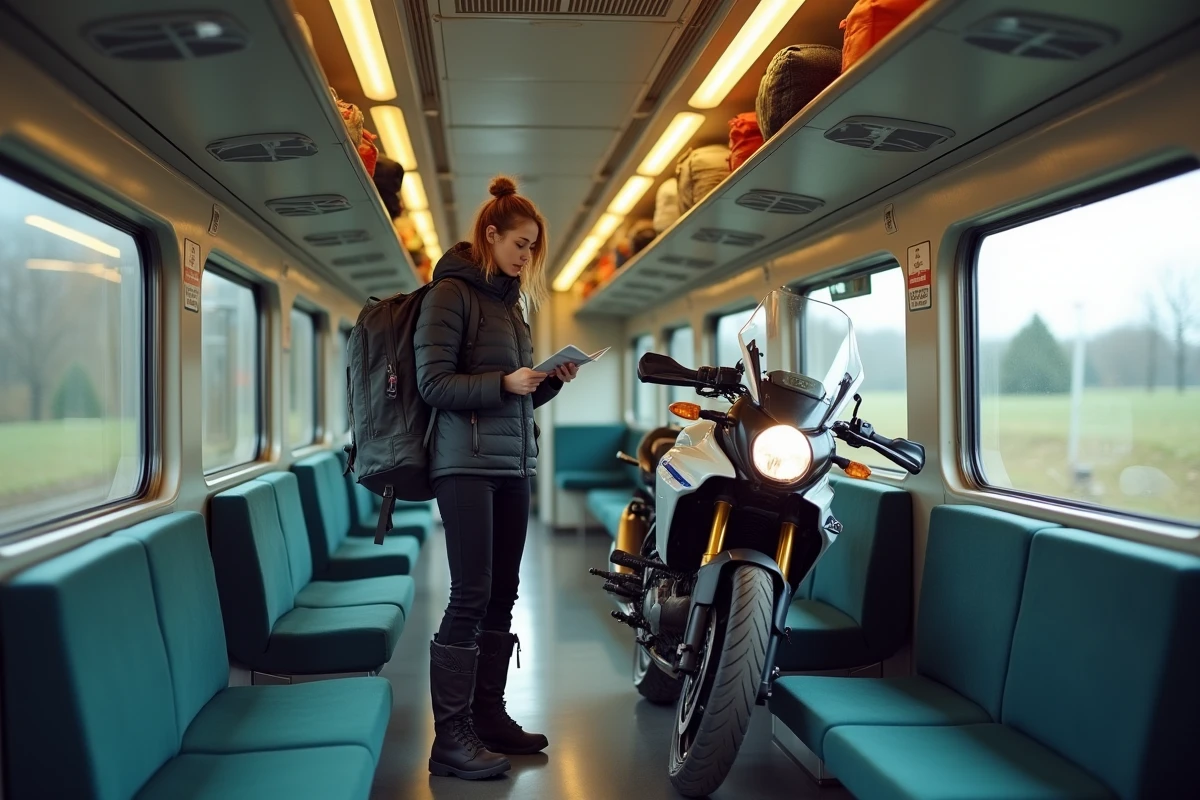
Practical tips for organizing a successful motorcycle road trip with the train as an ally
The success of a mixed motorcycle-train trip relies on meticulous preparation, but also on flexibility. As soon as tickets go on sale, booking ensures you have your spot: motorcycle spaces are highly contested, especially during summer departures. It remains crucial to read every instruction: boarding times, maximum dimensions, list of necessary equipment. Once disembarked, freedom takes over. Cruising the roads of Portugal, following the Greek coasts, or climbing the Balkan passes is nothing but an inaccessible dream, provided you anticipate quality straps, a protective cover, and a reflective vest at hand during station operations. Depending on the companies, a disconnected battery or partially full tank are also part of the requirements. Don’t overlook the logistics question. Accommodation close to the departure or arrival station simplifies connections, especially late at night or very early in the morning. Some cities like Athens or Dubrovnik have secure parking just steps from the terminals.
Here are the key points to keep in mind before embarking:
- Ensure that your two-wheeler insurance also covers rail transport
- Always carry the vehicle’s documents as well as an ID
- Make a complete list of your equipment to avoid unpleasant surprises
Gathering your documents, securely strapping your mount, booking early, and remaining flexible with plans: this is what makes the difference between a stressful trip and a smooth experience. Upon disembarking from the train, the road awaits, the motorcycle hums, ready to devour kilometers of unknown asphalt.