
Effective Tips for Cleaning and Maintaining Your Straw Placemats
White vinegar damages straw fibers when used pure, even though many tips recommend it for natural objects. In contrast, soapy water preserves the flexibility of weaves without altering their original color. However, some materials, like varnished wicker, are less sensitive to common household products than one might think.
Regular maintenance slows the proliferation of bacteria and allows the sets to last longer, but excessive moisture remains their main adversary. The differences in treatment between raw straw and varnished wicker require adapting one’s method to the texture of each piece.
Why straw and wicker require special attention
Straw placemats are appealing for their raw look and the warmth they bring to the table, but they demand meticulous care. Whether it’s straw, wicker, raffia, or bamboo, these natural fibers remain alive and vulnerable to everyday aggressions. Moisture, in particular, undermines the structure of the weave: excessive absorption eventually dulls, distorts, and sometimes encourages mold. The placemat protects the table surface and the tablecloth from stains and thermal shocks, but its own durability depends on rigorous maintenance.
The challenge is not limited to removing visible dust. Regular dusting with a soft brush or a suitable vacuum attachment allows the fibers to retain their flexibility and shine, while occasional cleaning with lukewarm water and Marseille soap restores the material’s clarity without soaking it. Each time, it is essential to let it air dry in the shade to prevent heat or UV rays from damaging the color or structure of the set.
For those who want to preserve these items, a few rules must be followed. Avoid exposing them to direct light or prolonged moisture: outside, straw and wicker deteriorate quickly. Those looking for how to clean straw placemats will find practical advice, the right products to use, and mistakes to avoid on the page ‘Cleaning straw placemats for a sparkling table.’ This will help maintain the beauty and utility of these accessories, true pieces of craftsmanship that enhance the table.
Which products and actions to prioritize for safe cleaning
To keep the fineness of the natural fibers that make up these sets intact, gentleness is key. Dusting should be done with a soft brush or a vacuum cleaner with a suitable attachment to remove particles without damaging the weaving. A simple action, repeated regularly, is enough to prevent dirt from embedding and dulling the appearance of the set.
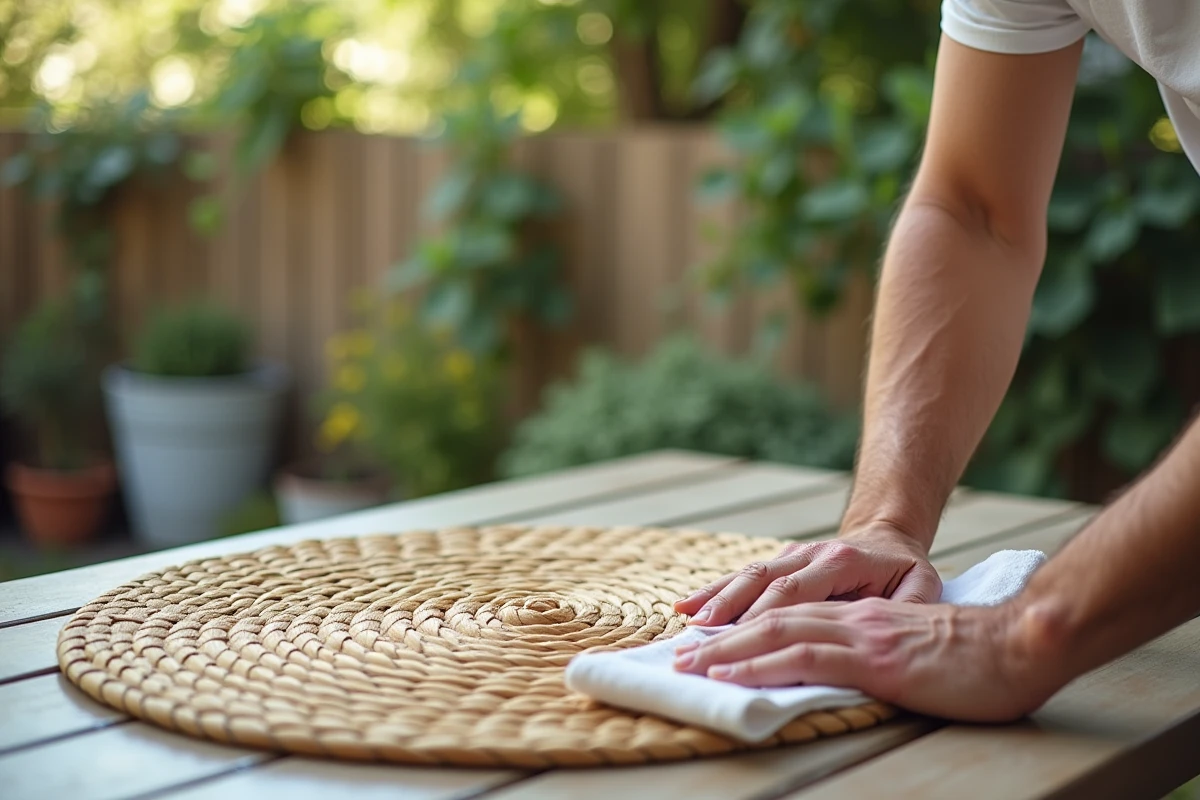
For deeper cleaning, simply dilute a bit of Marseille soap in lukewarm water. A barely damp microfiber cloth or a soft sponge can be used to gently scrub the surface. It is crucial to limit moisture: straw does not tolerate excess water and heavy rubbing well. For stubborn stains, a light mixture of water and white vinegar (one tablespoon for one liter of water) cleans without altering the colors.
Here are the rules to follow to avoid damaging your sets:
- Avoid bleach, strong detergents, or abrasive sponges.
- Dry flat, in the shade and in the open air, on an absorbent cloth. To speed up drying, the warm air from a hairdryer works well.
- For corners or reliefs, a soft toothbrush is ideal for removing impurities without damaging the fiber.
By carefully selecting products and working delicately, one ensures the durability and elegance of straw placemats. Taking the time to properly maintain these accessories is to respect the craftsmanship and the nature of each fiber.
Little secrets to extend the lifespan of your natural placemats
A straw placemat retains its appearance as long as it is kept away from two traps: moisture and direct sunlight. Leaving these materials too long under rays or in overly humid air risks discoloration, deformation, fragility, and sometimes mold. After each meal, it is better to gently shake the sets to remove crumbs and dust, then store them flat, in a dry place, away from temperature fluctuations.
To enhance the protection of the straw, sometimes all it takes is to apply a thin layer of beeswax or linseed oil with a soft cloth. This action, performed every three to six months, limits moisture penetration, nourishes the fibers, and preserves the natural shine of the set.
Old stains or faded colors can be treated with a mixture of lemon juice and raw milk. A cotton ball soaked, a few gentle rubs, and drying in the shade, and the material regains its freshness without being harmed.
In case of a broken strand or loose weaving, consulting a professional weaver is necessary: their expertise brings your accessories back to life and values the work of the hands that created them. These sometimes discreet actions make the difference between an ephemeral object and a piece that transcends the seasons, always ready to host a new meal with family or friends.