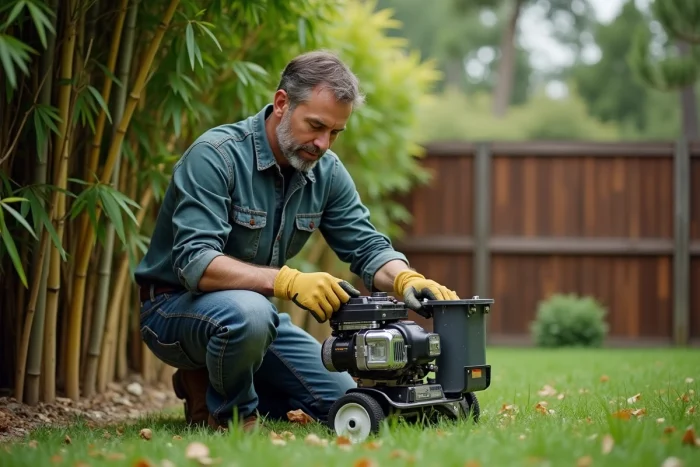
How to Choose the Ideal Shredder to Effectively Eliminate Bamboo from the Garden
Some garden shredders get blocked or wear out prematurely when faced with bamboo fibers, while other models, designed for softwood, prove ineffective. Poor choices often lead to the proliferation of regrowth due to incomplete destruction of the rhizomes.
The stems of bamboo are anything but docile: their strength and the way they root impose very specific technical requirements. Choosing your equipment therefore goes beyond simply comparing the power displayed on the packaging. One must consider the cutting system, how the residues will be processed, and plan for the future: how to prevent everything from regrowing? The most effective solutions combine mechanical methods and preventive devices to avoid turning your garden into an experimental ground for invasive bamboos.
Invasive bamboos: understanding the problem to act better
In the garden, the proliferation of running bamboo is no trivial matter. This plant asserts itself through the vigor of its rhizomes, true underground networks capable of spreading several meters in a single season. The Phyllostachys, the undisputed champion of running bamboos, provides a perfect illustration: once established, its root system burrows deep and spreads widely, making it difficult for anyone wanting to regain control of their land. The elegance of the culms conceals a feared invasive potential in many gardens.
To counter the offensive, some rely on the anti-rhizome barrier: a rigid or semi-rigid membrane, buried vertically, limits the progression of the rhizomes. Others prefer the tactic of the anti-rhizome trench: regular maintenance is then necessary to cut off any attempts at vegetative escape. These techniques, combined with constant vigilance, allow for the containment of running bamboos, thus preventing the garden from turning into an uncontrollable monoculture.
In contrast, the Fargesia, a non-running bamboo, is much more discreet. Its growth remains measured, and its rhizomes know how to stay in place. The choice of species thus heavily influences the future management of the garden and the solutions to implement to preserve biodiversity.
But when the density of the culms and the tenacity of the roots take over, the question arises insistently: which shredder to use for bamboo to effectively eliminate the residues from mechanical interventions? This is where everything is at stake: the choice of tool determines the effectiveness of elimination and the valorization of green waste.
What methods to sustainably eliminate bamboos from the garden?
To tackle running bamboo, one must arm themselves with perseverance and vary strategies. Simply cutting the culms weakens the plant, but does not resolve the issue of the rhizomes, which are firmly anchored underground. To achieve a lasting result, it is recommended to combine several actions:
- Manual or mechanical uprooting: tackle the rhizomes with a spade, pickaxe, or, for larger areas, with a mini-excavator. The rhizomes, true underground cords, must be extracted as much as possible to limit any risk of regrowth.
- Covering with an opaque tarp: after cutting and removing part of the roots, a black tarp is placed over the affected area. Deprived of light, the bamboo exhausts its reserves due to lack of photosynthesis. One must monitor new shoots at the periphery: they signal the presence of forgotten roots.
As for chemical herbicides, glyphosate, hydrochloric acid, bleach, they offer no solution against bamboo and jeopardize soil life and biodiversity. Mechanical and cultural methods remain the only allies of a living garden.
The next step concerns the fate of the green waste generated. A garden shredder proves invaluable: it reduces stems and branches to mulch, decreasing the initial volume by up to 80%. This mulch finds a second life as mulch or compost, thus participating in a virtuous circle in the garden. Managing the residues is completing the work started against the invasion.
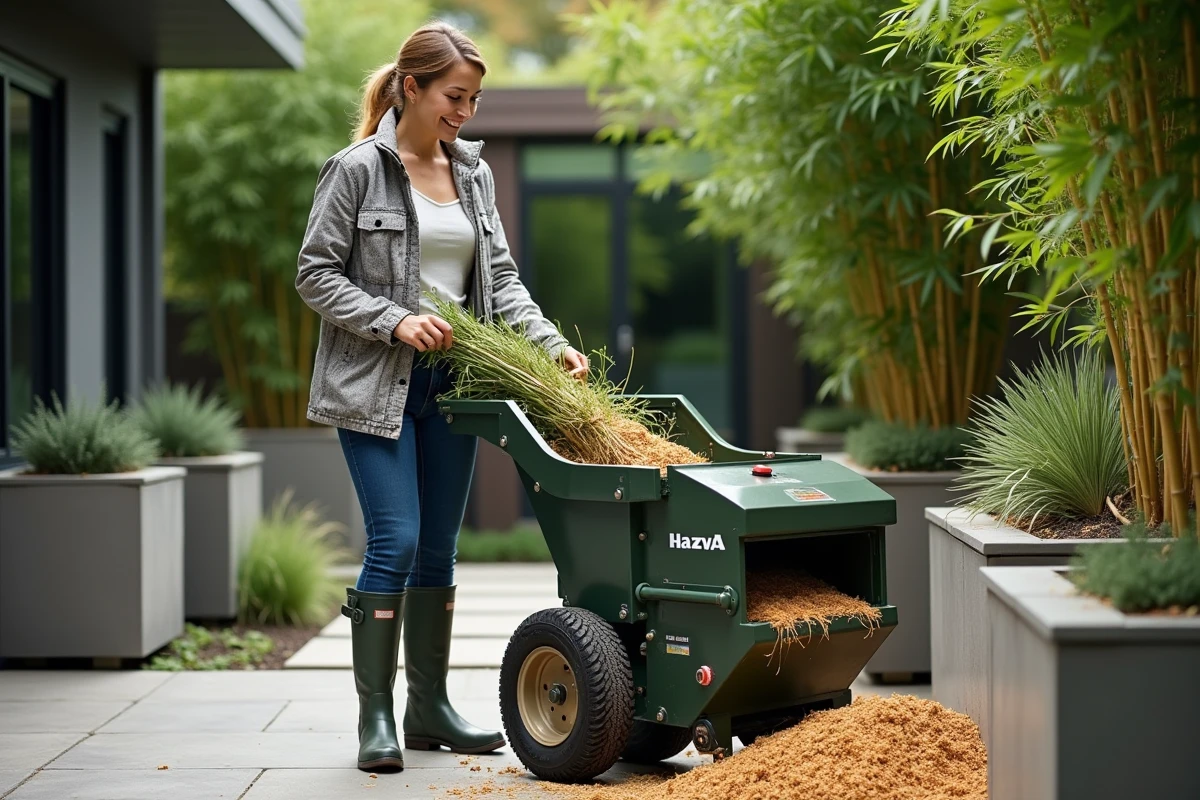
Choosing the right shredder: essential criteria for effectively processing bamboos
When it comes to controlling bamboo, particularly running varieties, it is not enough to look at the aesthetics or price of the garden shredder. What matters is the motor power, the ability to swallow thick branches without flinching, and the quality of the cutting mechanism.
Here are the guidelines for choosing a suitable shredder:
- Electric or thermal shredder? For a garden of less than 500 m², the electric shredder does its job, provided not to exceed 35 mm in diameter per branch. Beyond that, the thermal shredder is necessary: it takes over against tough stems and thick sections of adult bamboos.
- The blade disc is practical for foliage and thin stems, while the rotor system or turbine system tackles robust branches without fail.
| Type of shredder | Recommended area | Max. Branch diameter | Type of waste |
|---|---|---|---|
| Electric | < 500 m² | ≤ 35 mm | Leaves, small branches |
| Thermal | Large areas | > 35 mm | Bamboos, hardwood |
Safety is never to be overlooked: goggles, gloves, suitable shoes, and hearing protection are essential. Regular maintenance of the shredder prevents unpleasant surprises and prolongs its performance. As for the mulch, it is eager to enrich the garden: as mulch or compost, it slows the regrowth of bamboo while nourishing the soil.
In the face of the raw energy of bamboos, it is better to choose rigor and method: this is how the garden gradually regains its balance, without ceding ground to the invader.