How to Find Original Pieces to Refresh Your Style with Taste
Refreshing your style doesn’t necessarily mean replacing your entire wardrobe. Adding one or two carefully chosen statement pieces can change the look of an entire outfit. The word “original” deserves a precise definition: it refers to a garment or accessory whose cut, fabric, pattern or story sets it apart from mass-produced items. Finding these pieces means knowing where to look, but also being able to recognize which ones are truly worth buying.
Check the condition of a second-hand piece before you buy
Second-hand shopping has become a go-to way to find distinctive clothing. Thrift stores, charity shops, flea markets and online platforms offer a huge range of items. The challenge is no longer finding something you like, but telling a genuine bargain from a purchase you’ll regret.
One fact is worth stating upfront: repairs to collected items are still rare. Most second-hand clothes are resold as-is. Checking the quality yourself before buying isn’t a luxury—it’s essential. Inspecting four areas can help you quickly assess a vintage or second-hand garment:
- Main seams (shoulders, armholes, inseams): a pulled thread or puckered topstitching can indicate structural wear that’s difficult to repair without professional help.
- Fastenings (zippers, snap buttons, hooks): replacing them takes time and can sometimes cost as much as a new budget garment, especially on a vintage piece with hard-to-find hardware.
- Lining: torn or detached lining often indicates that the garment has been worn heavily, even if the outside looks fine.
- Signs of localized wear (collar, cuffs, knees, seat of the trousers): these areas reveal a piece’s true age better than any label.
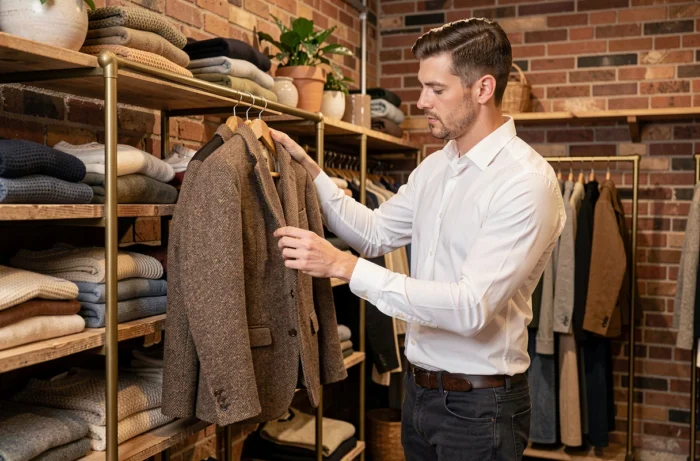
When shopping on an online platform, asking for close-up photos of these four areas is always a good idea. In a physical store, turning the garment inside out and checking it in the light takes thirty seconds and helps avoid most disappointments.
Second-hand prices and designer pieces: beware of the “always cheaper” myth
The common assumption that second-hand items are always better value than new ones needs correcting. According to Refashion data, the average price of a second-hand item was close to that of a new entry-level item in 2025. In other words, buying vintage trousers for about the same price as a basic new pair isn’t automatically a good deal.
For the purchase to be worthwhile, the piece needs to offer something that new entry-level clothing doesn’t: a heavier fabric, a cut you can’t find in current collections, or a distinctive pattern or artisanal finish.
A full-grain leather bag from the 1990s is worth its price because the leather used at the time often differs from what’s used in current products at a similar price point. A slightly yellowed basic T-shirt sold for the same price as a new one, on the other hand, has nothing to recommend it.
Brands are also developing their own second-hand offerings. Refashion reports that sales volumes grew in 2025 among retailers offering second-hand items. For shoppers, this means another option: some brands resell inspected and sometimes cleaned items, with traceability that peer-to-peer platforms don’t always guarantee. Browsing Monsieur Simon’s shopping picks is a great way to find carefully selected pieces outside the usual fast-fashion channels.
Thrift store, flea market or online platform: choose the right channel for the piece you want
Not all second-hand channels are equal, and the best choice depends on the type of item you’re looking for. Physical stores remain a major source of original clothing because they let you feel the fabric, try on the garment and check its condition in person.
Specialist thrift stores (vintage, designer or focused on specific decades) curate their stock in advance. Prices are higher, but the sorting has already been done. For a 1970s dress or a structured leather jacket, this channel offers a better return on the time you spend than a general flea market.
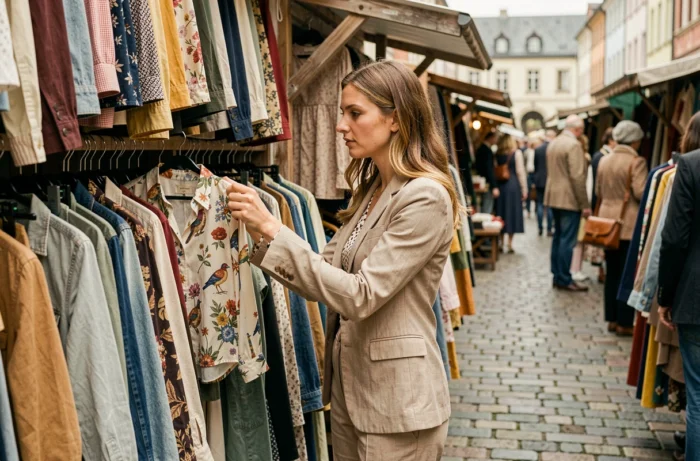
Flea markets and antique fairs work the other way around: plenty of items, often low prices, but no prior selection. Patience is the price of entry. They’re a good place to look for accessories (belts, scarves, jewelry) and denim or knitwear, whose condition is easy to check at a glance.
Online platforms expand your search geographically. A specific look, brand or hard-to-find size becomes easier to track down. The trade-off is that you can’t feel the garment. Asking for detailed photos of the seams and fastenings is the only reliable way to avoid unpleasant surprises.
Work an original piece into a cohesive look
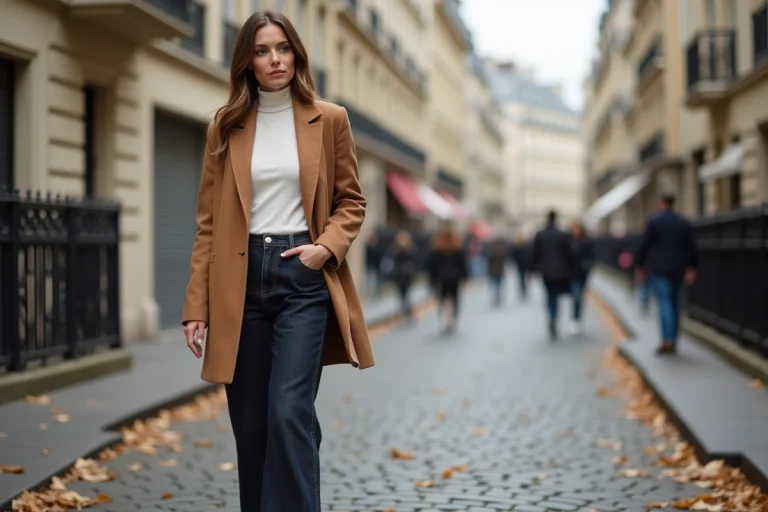
A statement piece only works if the rest of the outfit gives it room to shine. The principle is simple: one standout piece per outfit. Wear vintage patterned trousers with a plain top. Pair a structured 1980s jacket with raw denim and a simple T-shirt.
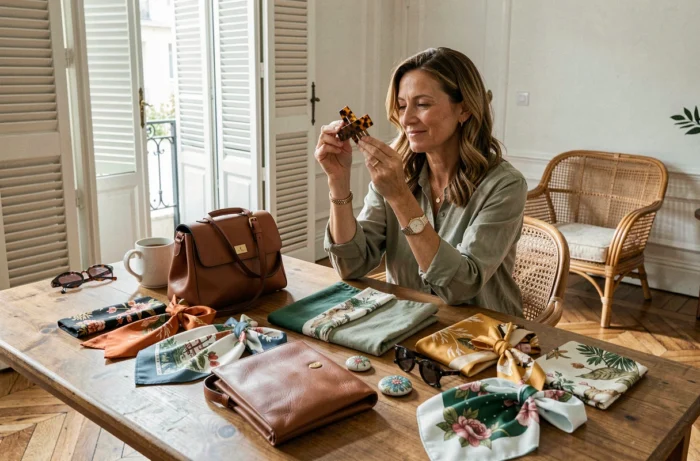
A common mistake is piling several original pieces into the same look in the belief that it will make a bigger impact. The opposite happens: the pieces compete with one another, and the outfit loses its clarity. Accessories can help tie everything together. A bag or belt in a shade that picks up one of the main garment’s colors brings the look together without making it feel overdone.
Try it before you commit
Before investing in an expensive vintage piece, imagine wearing it with three different outfits to see how versatile it is. If it only works with one pair of trousers or one style of shoes, its cost per wear will be high, whatever you paid for it.
Cost per wear is still the best way to assess a fashion purchase, whether new or second-hand. An original piece that you wear regularly is worth paying more for. A showstopper that stays in the closet after two outings isn’t a smart buy, even if you found it for a low price in a thrift store.